


Stanley Morison
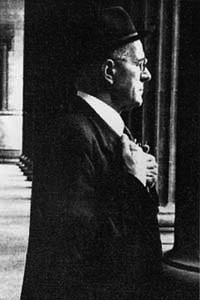
Stanley Morison (1889 – 1967) was an English typographer, designer and historian of printing.
Morison was self-taught, having left school early after his father abandoned the family.
In 1922 he was a founder-member of the Fleuron Society dedicated to typographical matters (a fleuron being a typographic flower or ornament). He edited the society's journal The Fleuron from 1925 to 1930. The quality of the publication's artwork and printing was considered exceptional.
In the 1920s and 1930s, while employed at the Monotype Corporation Morison's work included research and adaptation of historic typefaces, including the revival of the Baskerville and Bembo types. He pioneered the great expansion of the company's range of typefaces and hugely influenced the field of typography to the present day.
Morison was also typographical consultant to The Times newspaper from 1929 to 1960 and in 1931, after having publicly criticised the paper for the poor quality of its printing, he was commissioned by the newspaper to produce a new easy-to-read typeface for the publication. Times New Roman, the typeface Morison developed with graphic artist Victor Lardent, was first used by the newspaper in 1932 and was issued commercially by Monotype in 1933.
Morison was elected a Royal Designer for Industry in 1960 and was a member of the editorial board of Encyclopædia Britannica from 1961 until his death in 1967 in London.


